Stretching and good posture are more important than ever in today’s digital world. Hours spent using computers, smartphones, and other devices often lead to rounded shoulders, a forward head position, and a slouched upper back. While these habits may seem harmless, they can contribute to stiffness, discomfort, and reduced mobility over time.
Research shows that regular stretching improves flexibility and range of motion. Stretching a muscle group for about one minute per session, at least five days a week, can produce meaningful improvements. Like most healthy habits, consistency matters far more than intensity.
Posture also deserves attention. The longer poor posture becomes a habit, the harder it is to correct. Fortunately, small adjustments practiced consistently can make a significant difference in reducing strain and improving comfort.
The following stretches may help reduce muscle tension and improve mobility. Stretching should create a gentle pulling sensation—not sharp, burning, or radiating pain. If a stretch increases your symptoms, stop or reduce the intensity.
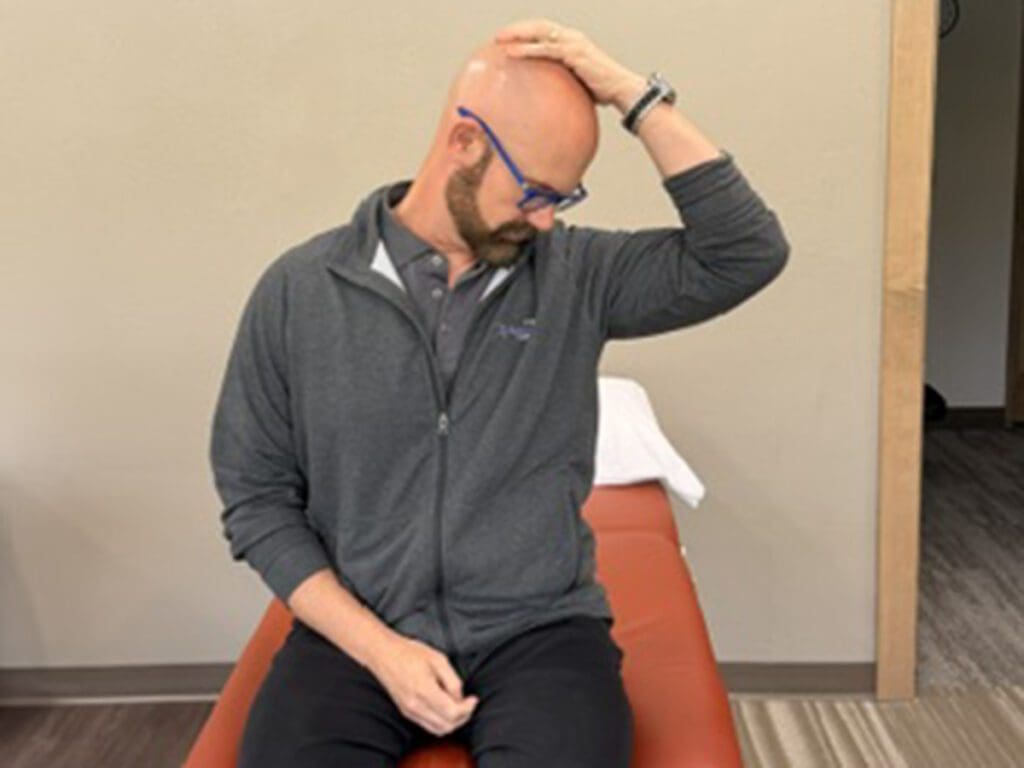
The upper trapezius, located along the neck and top of the shoulder, is one of the body’s most commonly tight muscles.
Sit on one hand or hold the edge of a chair to keep your shoulder down. Looking straight ahead, slowly tilt your head, bringing your ear toward the opposite shoulder. Apply gentle pressure with your hand if needed. You should feel a mild stretch along the side of your neck and shoulder.
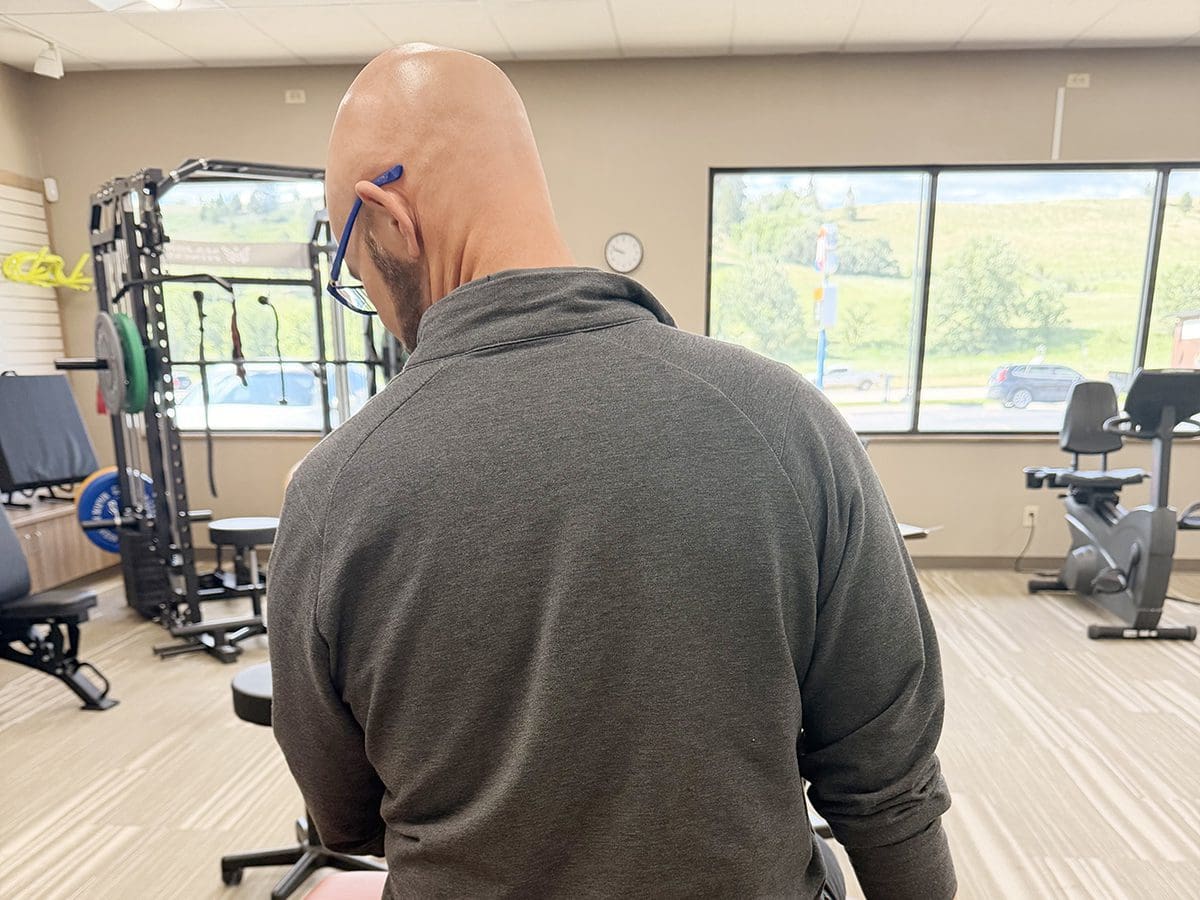
The levator scapulae connects the upper shoulder blade to the neck and is another common source of stiffness.
Anchor one shoulder by sitting on your hand or holding a chair. Turn your head about 45 degrees away from the side being stretched, then gently lower your chin toward your chest. You should feel a stretch along the back and side of your neck toward the shoulder blade.
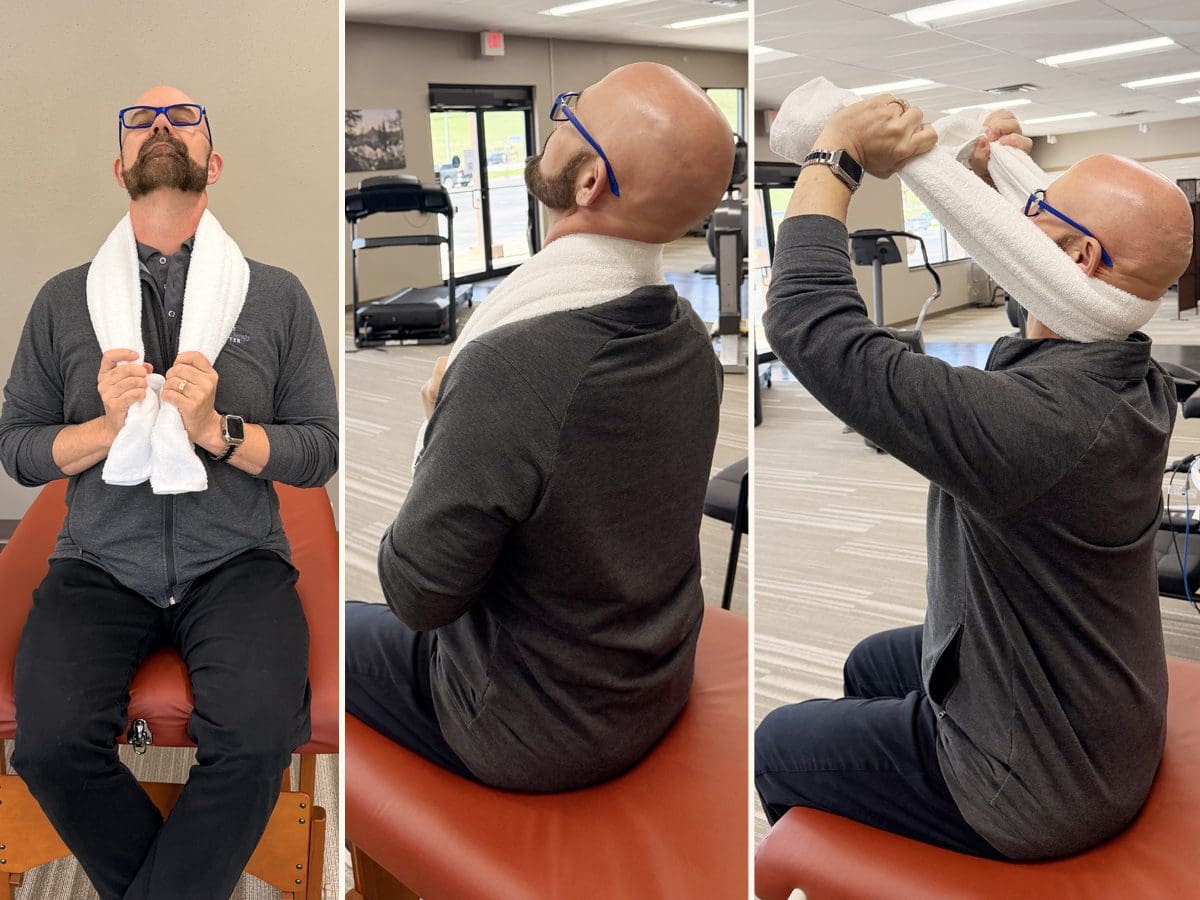
For those who feel stiffness when looking upward, this exercise may help improve neck mobility.
Place a towel, belt, or exercise band across the stiff area of your neck while holding each end in front of you. Apply gentle downward tension as you slowly look toward the ceiling. Adjust the angle of the pull slightly depending on where you feel stiffness. All movements should remain slow, controlled, and comfortable.
Posture plays a critical role in spinal health. While natural aging can contribute to arthritis and disc changes, poor posture often accelerates discomfort regardless of age.
Today’s technology encourages prolonged periods of looking down at phones or leaning toward computer screens. Fortunately, simple ergonomic changes can help reduce these stresses.
When sitting at a computer, position your monitor at or just below eye level. Keep your elbows comfortably at your sides and your shoulders relaxed. Your keyboard and mouse should be close enough that you don’t have to reach forward.
Chair design also matters. Many office chairs allow the pelvis to roll backward, causing the lower back to round and increasing strain on the spine. Aim to sit with your knees level with or slightly lower than your hips, both bent around 90 degrees, and your feet flat on the floor. This position helps maintain the spine’s natural curves and reduces stress on the lower back.
While there is no such thing as perfect posture, staying aware of your body position throughout the day and incorporating regular stretching can go a long way toward reducing discomfort, improving mobility, and supporting long-term musculoskeletal health.